Alaska is the largest U.S. state, more than twice the size of Texas, and its highlights are spread across very different regions. These include the fjords and island towns of the Inside Passage, the glaciers and wildlife of the Kenai Peninsula, the mountains of the Interior, and remote bear country in the southwest. Whether you see it by small ship, by train, on a land tour, or on a combination of all three, a little planning goes a long way.
The 23 places below are grouped by region, so you can see which ones fit naturally on the same trip.
Southeast Alaska and the Inside Passage
Southeast Alaska is a maze of forested islands, fjords, and small towns, most of them reachable only by sea or air. It’s the heart of Alaska cruising.
1. The Inside Passage
The Inside Passage is a network of sheltered coastal waterways that runs from northern British Columbia through Southeast Alaska. Steep, forested islands and deep fjords line the route, and humpback whales, sea lions, and bald eagles are common sights from the deck. This is the homeland of the Tlingit, Haida, and Tsimshian peoples, whose cultures are visible in towns along the way. The Inside Passage is best seen on an
Alaska small-ship cruise, which can stop in smaller towns and quiet coves that large ships pass by. For a port-by-port overview, see our guide to the
top Alaska cruise ports.
2. Glacier Bay National Park
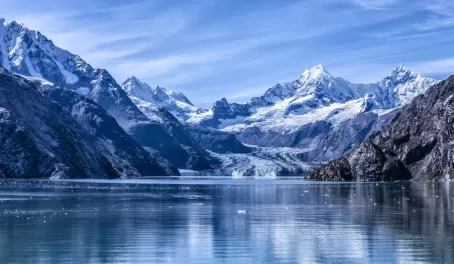
Glacier Bay National Park covers 3.3 million acres of tidewater glaciers, fjords, and mountains, and is part of a binational UNESCO World Heritage Site. Nearly all visitors see it from a ship. Park rangers come aboard to narrate, and passengers watch for calving ice, sea otters, brown bears, mountain goats, and whales. The National Park Service limits how many ships can enter each day, so not every cruise includes it. Read more in our guide to
things to do in Glacier Bay on a small ship cruise.
3. Juneau and Mendenhall Glacier
Alaska’s capital,
Juneau, can only be reached by sea or air, and it’s a common starting point for small-ship cruises. About 12 miles from downtown, Mendenhall Glacier flows from the 1,500-square-mile Juneau Icefield into Mendenhall Lake, with Nugget Falls beside it. Forest Service trails lead to viewpoints of the glacier and lake, and guided glacier hikes and kayak trips are offered in summer. Conditions on and near the ice change from year to year, so ask your guide what’s possible during your visit. Learn more in our
facts about Juneau.
4. Endicott Arm and Tracy Arm
South of Juneau, these two long fjords are lined with granite cliffs and waterfalls and end at tidewater glaciers: Dawes Glacier in
Endicott Arm, and the Sawyer Glaciers in Tracy Arm. In August 2025, a landslide near South Sawyer Glacier triggered a large tsunami in Tracy Arm. Several cruise lines removed Tracy Arm from their 2026 itineraries and now visit Endicott Arm instead. Harbor seals often rest on the ice in both fjords. Check your itinerary for which fjord is included, and expect routes to depend on ice and safety conditions.
5. Frederick Sound
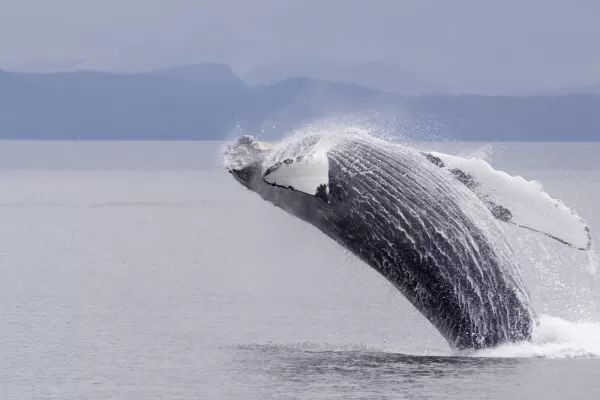
Frederick Sound, between Petersburg and Admiralty Island, is one of the most reliable places in Southeast Alaska to see feeding humpback whales in summer. Some whales feed cooperatively by bubble-netting, rising through the water together with their mouths open. Steller sea lions haul out on nearby rocks, and small ships often linger here for whale watching, sometimes using hydrophones so passengers can listen to the whales underwater.
6. Petersburg and Wrangell
These two quiet towns appear mainly on small-ship itineraries. Petersburg, founded by Norwegian settler Peter Buschmann in 1897, is still a working fishing town, and it’s a starting point for visits to LeConte Glacier. Wrangell, near the mouth of the Stikine River, has been governed by four nations: the Tlingit, Russia, Britain, and the United States. At Petroglyph Beach, you can see rock carvings believed to be thousands of years old.
7. Sitka
Sitka was the capital of Russian America, and its Tlingit and Russian histories are visible side by side. At Sitka National Historical Park, a forest trail passes totem poles first collected from Haida and Tlingit villages in the early 1900s. Most of the poles standing outdoors today are careful re-carvings, with the remaining originals protected indoors.
8. Ketchikan
Ketchikan is often the first Alaska port on a northbound cruise. It’s known for its totem poles, fishing heritage, and frequent rain. The town’s totem collections and cultural centers make it a good introduction to Tlingit, Haida, and Tsimshian art. Our
Alaska cultural tours include visits to communities across the region.
9. Misty Fjords National Monument
East of Ketchikan, Misty Fjords National Monument protects more than 2 million acres of sheer granite cliffs, waterfalls, and rainforest along deep, glacier-carved fjords. Most visitors see it by floatplane from Ketchikan or on a day cruise. Some small-ship itineraries sail into its fjords, such as Rudyerd Bay and Walker Cove.
10. Skagway and the White Pass Railway
Skagway, at the north end of Lynn Canal, was the gateway to the Klondike Gold Rush in the late 1890s. Its restored downtown is part of Klondike Gold Rush National Historical Park, and the historic White Pass & Yukon Route railway climbs from town into the mountains along the route gold seekers once followed.
11. Haines and the Chilkat Bald Eagle Preserve
Haines sits near the northern end of Lynn Canal, surrounded by mountains. The Alaska Chilkat Bald Eagle Preserve is home to a few hundred eagles year-round, and thousands gather from mid-October through December to feed on a late salmon run. That’s after the cruise season, but summer visitors still see plenty of eagles, along with rafting, hiking, and the historic Fort William H. Seward.
12. Admiralty Island and Pack Creek
Across Stephens Passage from Juneau, Admiralty Island is home to an estimated 1,600 brown bears, the highest density in North America. The Tlingit call it Kootznoowoo, the “Fortress of the Bears.” In summer, visitors fly in by floatplane from Juneau to watch bears fish for salmon at the Pack Creek Bear Viewing Area, a permit-managed site within Admiralty Island National Monument.
Gulf of Alaska
13. Hubbard Glacier
Hubbard Glacier, in Disenchantment Bay near Yakutat, is one of the largest tidewater glaciers in North America. Its calving face is more than six miles wide, and it is fed by ice that begins about 76 miles inland. Hubbard is in the Gulf of Alaska, not the Inside Passage, so it’s usually included on one-way cruises between the Inside Passage and Seward or Whittier. Ships approach as close as ice allows, and harbor seals often rest on floating ice nearby.
Southcentral Alaska
Southcentral Alaska, around Anchorage and the Kenai Peninsula, combines road and rail access with glaciers, fjords, and coastal wildlife. It pairs naturally with a cruise that begins or ends in Seward or Whittier.
14. Kenai Fjords National Park
Kenai Fjords National Park, near Seward on the Kenai Peninsula, centers on the Harding Icefield and the tidewater glaciers that flow from it to the sea. Day cruises from Seward pass calving glaciers and seabird colonies, with chances to see puffins, sea otters, Steller sea lions, and whales. Exit Glacier, the park’s one road-accessible glacier, has trails ranging from short walks to a full-day climb toward the icefield.
15. Seward and Resurrection Bay
Seward sits at the head of Resurrection Bay, surrounded by mountains, and is the gateway to Kenai Fjords. It was founded in 1903 as the ocean terminus of the Alaska Railroad, and it’s a common start or end point for Gulf of Alaska cruises. Sea kayaking, coastal hikes, and wildlife cruises leave from town. The Alaska SeaLife Center, a public aquarium and marine research center, is a good stop on a rainy day.
16. Turnagain Arm
South of Anchorage, the Seward Highway and the Alaska Railroad follow Turnagain Arm, where the Chugach Mountains rise steeply from tidal flats. Dall sheep are often seen on the cliffs above the road, and beluga whales sometimes feed in the arm in late summer. On some high tides, a bore tide, a wave that moves up the inlet, rolls in from the sea. The Alaska Wildlife Conservation Center, at the head of the arm, cares for orphaned and injured animals.
17. Matanuska Glacier
About two hours northeast of Anchorage along the Glenn Highway, Matanuska Glacier is one of the largest glaciers in Alaska that you can reach by road. Guided glacier walks take visitors onto the ice with equipment and safety instruction, making it a good introduction to glacier hiking for first-timers.
18. Wrangell–St. Elias National Park
Wrangell–St. Elias is the largest national park in the United States, with mountains, glaciers, and icefields on a scale that’s hard to grasp. It’s part of the same World Heritage Site as Glacier Bay. Most visitors base themselves near McCarthy and the historic Kennecott copper mine, with options for glacier hikes and flightseeing.
19. The Alaska Railroad
The Alaska Railroad links Seward, Anchorage, Talkeetna, Denali, and Fairbanks. It’s an easy way to connect Southcentral Alaska with the Interior. Glass-domed cars and long stretches of track far from any road make the ride part of the trip, with chances to see moose and, on clear days, Denali.
Interior Alaska
20. Denali National Park and Preserve
Denali National Park and Preserve covers 6 million acres of tundra, forest, and mountains, and is home to Denali, the tallest peak in North America at 20,310 feet. Grizzly bears, moose, caribou, wolves, and Dall sheep are commonly seen from the single park road. Private vehicles are restricted beyond the first 15 miles, so most visitors travel the road on park buses and tours. Since 2021, a landslide at Pretty Rocks has kept buses from going beyond Mile 43. A new bridge was completed in September 2026, and full bus service along the 92-mile road is expected to resume in 2027. That will reopen the western end of the park for the first time in several years.
21. Fairbanks and the Northern Lights
Fairbanks sits beneath the auroral oval, which makes it one of the most reliable places in North America to see the northern lights. The best viewing season runs roughly from late August to mid-April, when nights are dark enough. Many lodges offer aurora wake-up calls, and winter trips often add dog sledding and visits to cultural centers. The aurora isn’t visible during the long summer daylight of cruise season, so it calls for a separate fall or winter trip.
Southwest Alaska
22. Katmai National Park and Preserve
Katmai is known for the brown bears that gather at Brooks Falls to catch leaping salmon. No roads lead to the park. Most visitors fly from Anchorage to King Salmon, then take a floatplane or boat to Brooks Camp, and day trips by floatplane also run from Anchorage, Homer, and Kodiak. Bears are most active at Brooks Camp in July and September. In July, they concentrate at the falls, and in September near the mouth of the Brooks River. The park also protects the Valley of Ten Thousand Smokes, a vast ash flow left by a 1912 eruption.
23. Kodiak Island
Kodiak is home to the Kodiak brown bear and one of the busiest commercial fishing ports in the United States. Most visitors either fly out to remote lodges for bear viewing and fishing or explore the island’s small road system from town. Some expedition cruises across the Gulf of Alaska stop in Kodiak.
Tips for Planning Your Alaska Trip
When to Go
The main travel season runs from about mid-May to mid-September, when cruise ships sail, the Denali Park Road is open, and wildlife is active. June and July bring the longest days. Late August and September bring fall color, fewer visitors, and the first dark nights for aurora viewing in the Interior. See our guide to the
best time to take an Alaskan cruise for month-by-month details.
Combining Regions
Alaska is too large to see everything in one trip. Many travelers pair a small-ship cruise through the Inside Passage with a land extension to Denali and Kenai Fjords, connected by the Alaska Railroad or a cruise that ends in Seward or Whittier. Others focus on one region, for example, a week of wildlife watching between Juneau and Sitka, or a land journey from Anchorage to Fairbanks.
Small Ship, Land Tour, or Both
Small ships suit travelers who want Glacier Bay, quiet fjords, and towns like Petersburg and Wrangell without long travel days. Land tours suit Denali, the Kenai Peninsula, and the Interior. Combination trips cover both coastal and inland Alaska. Browse our
Alaska small-ship cruises,
Alaska land tours, and
wilderness lodges.
What to Pack
Pack layers for every trip: a waterproof rain jacket, a warm fleece or insulated layer, a hat, and gloves, even in July. For a cruise, add binoculars and comfortable shoes for wet decks and skiff landings. For a land tour, bring sturdy walking shoes and a daypack. A camera with a zoom lens helps for wildlife at a distance.
How Adventure Life Helps
Our Trip Planners match travelers with the right ship, lodge, or land tour and connect the pieces into one itinerary, including flights, hotels before and after, and transfers. They can also advise on which regions pair well for the time you have.