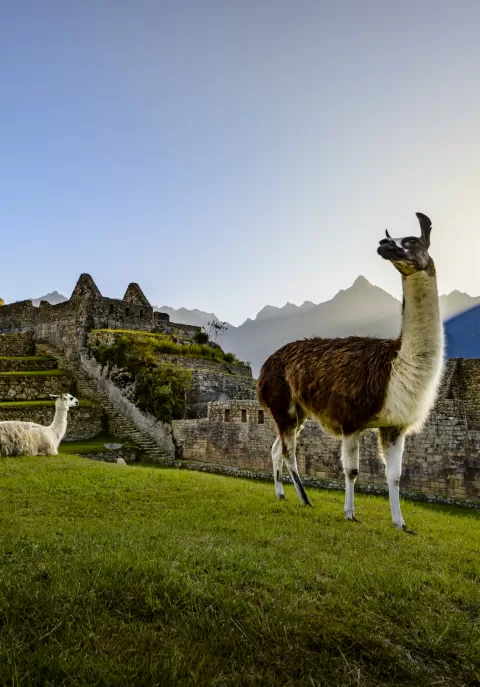
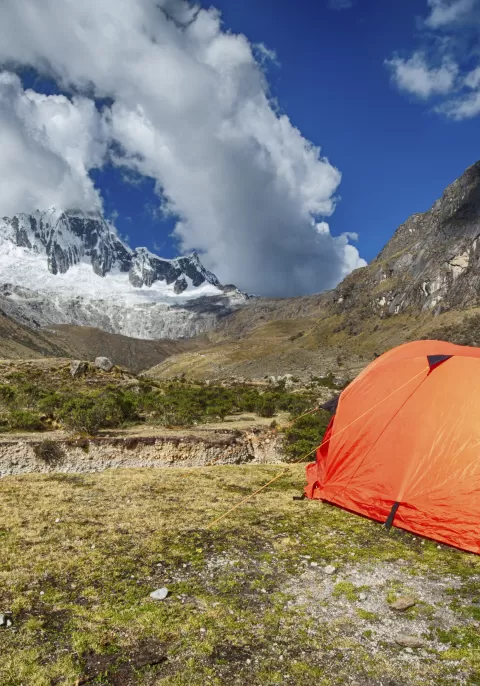
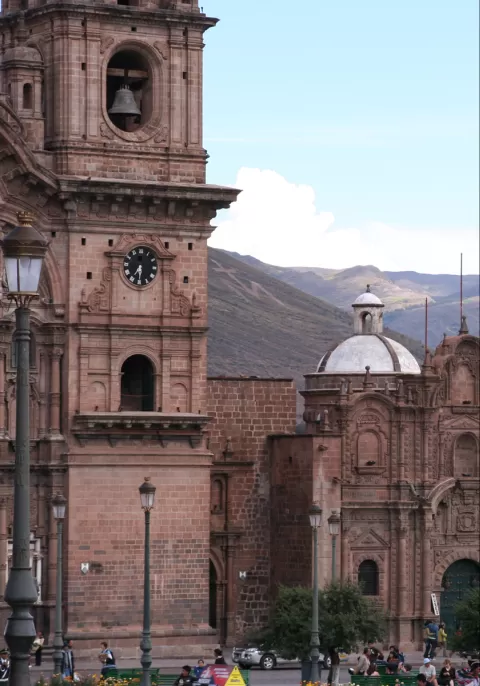
Located in the southeastern part of the Andes, Cusco is Peru's main tourist destination and one of the most important in the Americas. Known by the Incas as the "home of gods", Cusco became the capital of one of the largest pre-Columbian empires: the Tawantinsuyo. Its name in Quechua, Qosqo means "Navel of the World". which derives from when the city served as a hub for when the Inca would travel the vast network of roads interconnecting virtually the whole of South America, from the southern part of present-day Colombia to the northern part of what is now Argentina. Furthermore, Cusco is also both a mestizo and colonial city, with splendid churches and manors built on foundations of elaborately carved stone. The local cuisine is also something for the traveler to look forward to, including superb combinations of typical Andean foods, such as corn, potatoes, and chili pepper, with pork and mutton introduced by the Spanish. With its vast landscapes, rich history and fascinating geography, Cusco is, without a doubt, something all travelers long to experience. Our first views of Humantay Mountain in the Andes of Cusco, Peru (Franny Friesz)
Legend and History
Although it was settled centuries before the Incas arrived, it was only during the period of Inca control (1438-1532) that the Huatanay River basin, upon which Cusco is built, reached its peak as an administrative, religious, and military center. The origins of the city are shrouded in myth and legends, which tell the tale of how the Inca Empire came to being. One of the most popular myths, from the chronicles kept by the Inca Garcilaso de la Vega, is that of a mythical couple, Manco Capac and Mama Ocllo, who emerged from the waters of Lake Titicaca to found the city of Cusco and teach its people how to cultivate the land. The city was divided into two sectors: an upper area, or Hanan, and a lower-lying area, or Hurin, references to both the geographical position of each area and the hierarchical position of their inhabitants. Moreover, it is also said that the outline of the first city had the shape of a puma with a falcon's head. When the Spaniards arrived in 1533, many pre-Hispanic structures were destroyed or used as foundations for new structures, which included churches, convents and mansions built in Baroque or Renaissance styles. Since then, Cusco has become one of the most representative expressions of mestizo culture anywhere in the Americas.
History of the City of Cusco
The city of Cusco became the political and spiritual center of the Inca Empire. Its strategic location in the Andes allowed the Incas to control trade and movement across their vast territory. Temples, palaces, and plazas were designed with precise stonework that showcased the empire’s skill in architecture and planning. This city was not just a capital but also a sacred place, believed to be the center of the world by the Inca people.
After the Spanish conquest in the 16th century, the city of Cuzco changed dramatically. Colonial churches and mansions were built on top of Inca foundations, blending European styles with traditional stone bases. Despite these transformations, much of the Inca architecture survived. Today, visitors can see walls and streets that have stood for centuries, preserved within the modern city. This mix of Inca and colonial heritage is part of what makes Cusco so unique.
Legends and Myths of Cusco
Cusco is tied to many legends that explain its origins and importance. Stories tell of sacred sites like Sacsayhuamán and Qorikancha, which were not only physical structures but also spiritual centers. These myths link the city to divine power, suggesting that gods and natural forces guided the creation of the Inca capital.
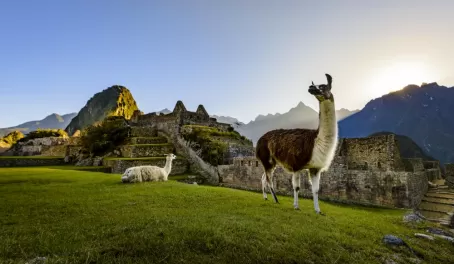
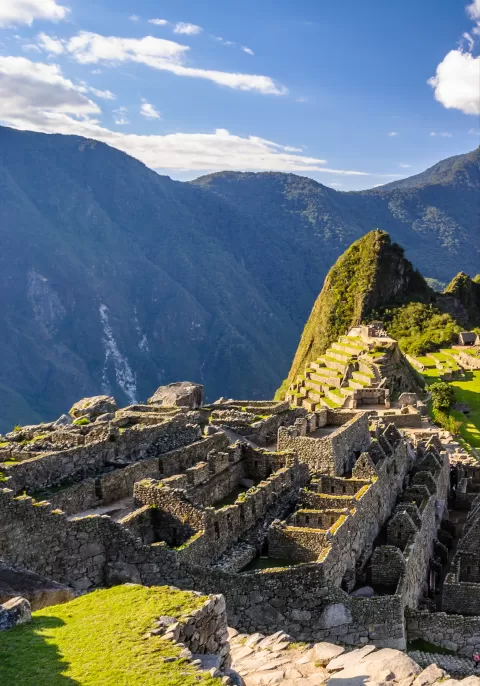
Other stories focus on rulers and sacred mountains. For example, Manco Capac and Mama Ocllo, said to have emerged from Lake Titicaca, symbolize the founding of Cusco. These myths remain alive through local festivals and traditions. Even today, folklore is celebrated as part of the city’s cultural identity, connecting present-day life with ancient beliefs. Our first stop: Sacsayhuaman in Cusco, Peru. (Michelle Dayon)
Must-See Historical Sites in Cusco
Travelers exploring Peru Cusco will find a mix of Inca and Spanish landmarks. Qorikancha, once the Temple of the Sun, was the most important religious site of the Inca Empire. Sacsayhuamán, with its massive stone walls, demonstrates the engineering skills of the Incas. Both sites are essential stops for anyone interested in the depth of Inca history.
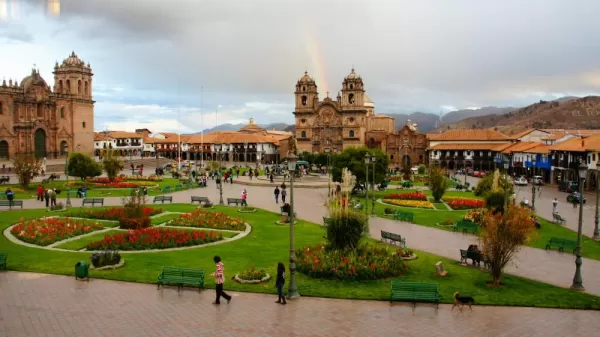
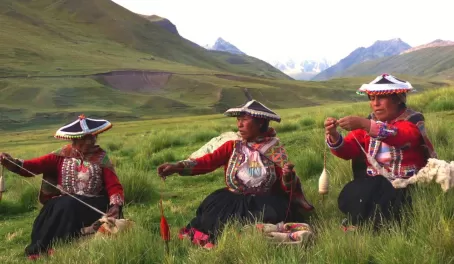
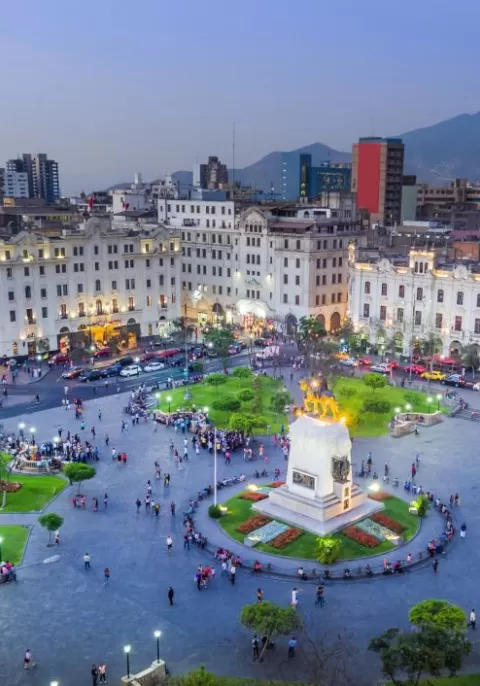
The city of Cusco also offers colonial and cultural highlights. Plaza de Armas is the historic center, surrounded by churches and colonial buildings. San Pedro Market adds another layer to the experience, showing how daily life continues in the same spaces that have hosted centuries of tradition. These sites combine to tell the story of Cusco’s layered past. Peruvian woman near Cusco carrying child on her back.
Cusco’s Cultural Significance Today
Cusco remains a cultural capital of Peru. Festivals like Inti Raymi, which recreates an Inca sun ceremony, and Corpus Christi, a major Catholic event, show how traditions blend indigenous and colonial influences. These celebrations bring together locals and travelers to honor history in public spaces that have hosted rituals for centuries.
Traditional music, dance, and crafts are central to Cusco’s identity. Artisans keep alive Inca weaving patterns, while musicians play instruments that reflect both indigenous and Spanish heritage. Local food also highlights this fusion, with dishes that mix Andean staples like potatoes and corn with meats introduced during colonial times.
Tips for Visiting Cusco, Peru
The best time to visit Cuscois during the dry season, from May to September, when weather is most reliable for exploring. However, this is also the busiest period, so booking early is recommended. Shoulder months like April and October are also good choices with fewer crowds.
Because the city of Cusco sits at 3,400 meters (11,152 feet), altitude adjustment is important. Plan at least two days in the city before heading to higher treks or Machu Picchu. Join guided tours to learn more about history, but also take time to walk the narrow streets at your own pace. Respect local customs and remember that tourism supports many communities in the region. Overlooking the Plaza de Armas, Cusco - double rainbow (Allison Falden)
Nearby Attractions from the City of Cusco
Cusco is the gateway to the Sacred Valley, where towns like Ollantaytambo, Pisac, and Chinchero hold impressive ruins and lively markets. These destinations are only a short drive away and give a fuller picture of the Inca world.
From Cusco, travelers can also reach Machu Picchu by train or multi-day trek. Other natural landmarks like Rainbow Mountain show the region’s unique landscapes. Starting from Cusco makes it possible to experience both cultural heritage and natural wonders in one trip.
FAQs About Cusco, Peru
What is the best time to visit Cusco?
The best time is May through September, during the dry season, though April and October also provide good weather with fewer crowds. How high is the city of Cusco?
Cusco is about 3,400 meters (11,152 feet) above sea level. Visitors should plan time to acclimate before strenuous activities. What is the difference between Cusco and Cuzco?
Both spellings are used. “Cusco” is more common today, while “Cuzco” is the traditional Spanish spelling. Can you explore the Inca ruins without a guide?
Yes, many sites can be visited independently, but guided tours add context and help you understand the significance of each place.
Talk to our Trip Planners for a personalized trip to Cusco.
Our team is waiting and ready to talk with you about your next adventure.
So go ahead and book an appointment with one of our specialized trip planners.
We had a fabulous trip to Peru thanks to Adventure Life and their local partner guides. We are so grateful for the smooth transitions from place to place and the ease with which we were shepherded and informed and had our own needs and idiosyncrasies accommodated for throughout this once in a lifetime trip.
Patricia Talbot
4 weeks ago
Timely responses and great follow up. Trying to figure out what was best for us is a great attribute for Jane and her team.
Neil Chernin
1 month ago
This is my fourth trip with Adventure Life and, as in the past, the staff was very knowledgeable and helpful. they talk with you about your desires and provide excellent suggestions.
Robert Thompson
2 months ago
AL was both responsive and patient as I worked through scheduling issues and changes.