Choquequirao (Juan Barrios Samanez)
Get to Know Choquequirao
Little known to the world, this ancient Peruvian city is often referred to as Machu Picchu's sister city. However, we wholeheartedly believe it is a worthy destination on its own. Deemed the "Lost City of the Incas," Machu Picchu is not so nameless anymore with more than one million visitors every year. Travelers can avoid these crowds and discover the amazing 15th century Choquequirao ruins located in the Salkantay Mountain Range.
A visit to Choquequirao is challenging with steep ascents, stone terraces, and strenuous two-day hikes each way. Not to mention, it necessitates crossing the Apurimac River in a basket suspended from a cable! Those up for the adventure will not be disappointed by their reward of stunning vistas, gorgeous campsites, and the liberty to explore the mysterious Incan ruins. If you are up for the challenge, learn more about taking the Choquequirao trek.
Plans are in place to build a tram that will provide easier access to Choquequirao. As a result, this area could see a dramatic increase in tourism. The Peruvian government hopes to have the tram system completed soon. Therefore, this is perhaps the last chance to experience the current Choquequirao before changes make it more crowded.
What is Choquequirao?
Choquequirao, meaning "Cradle of Gold" in Quechua, was built in the 15th century. It is believed to have been an important political and ceremonial center for the Incas. Its design reflects the typical layout of Inca cities, with terraces, plazas, and ceremonial platforms. Archaeologists continue to uncover new areas, showing that the site was larger than once thought.
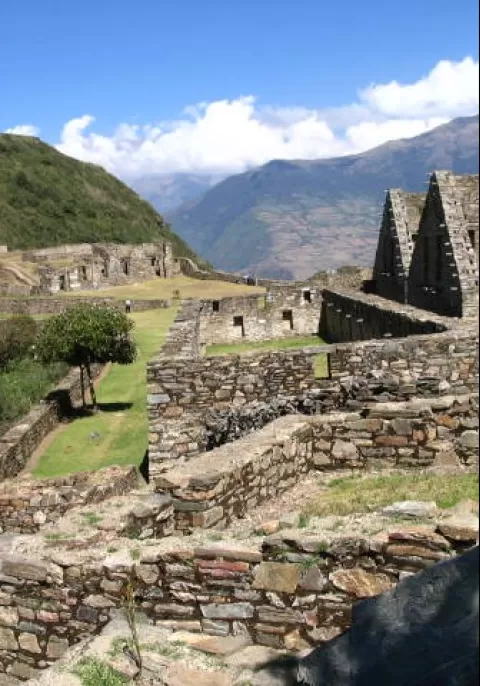
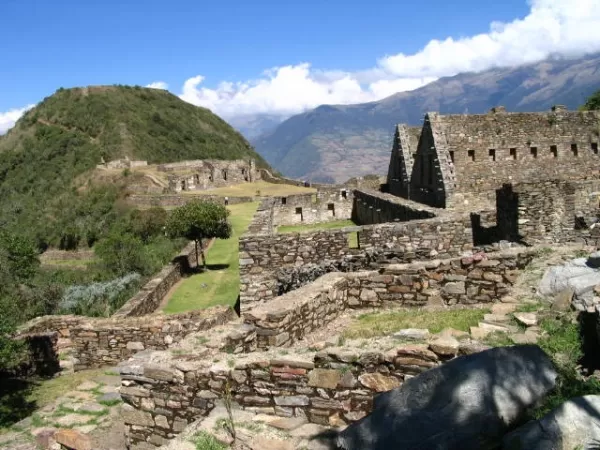
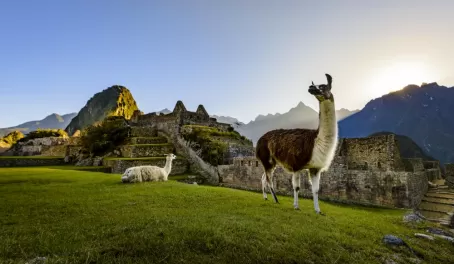
It is called Machu Picchu’s “sister city” because of its scale, stonework, and mountain location. Both sites share a similar architectural style, but Choquequirao Peru receives far fewer visitors due to its remote location. That exclusivity makes the ruins a special destination for travelers who enjoy history and quiet exploration. Choquequirao (Juan Barrios Samanez)
Where is Choquequirao Located?
Choquequirao sits in the Apurímac region, high in the Andes. The site lies at an altitude of about 3,050 meters (10,000 feet), surrounded by deep valleys and dramatic mountains. The terrain is steep and rugged, which adds to both the challenge and the beauty of the journey.
The Peru Choquequirao site is best visited in the dry season from May to October, when trails are more stable and skies are clearer. During the rainy months of November to April, conditions can be slippery, and river crossings are more dangerous. Planning the right season makes the trek more enjoyable and safer.
The Choquequirao Trek
The Choquequirao trek is demanding but rewarding. Most treks take four days round-trip, with two days of hiking each way. The paths are steep, with long ascents and descents, and crossing the Apurímac River is part of the challenge.
Compared to the Inca Trail, the Choquequirao trek is harder but less crowded. While the Inca Trail is famous for ending at Machu Picchu, Choquequirao offers a more remote experience. Travelers can trek independently or with guided groups, but most prefer guides for safety and logistics. Costs vary depending on tour packages, but they generally include guides, camping gear, meals, and transport to the trailhead. Beautiful mountain views as you hike the Choquequirao trek (Juan Barrios)
How to Get to Choquequirao
Most trips start from Cusco, the closest major city. From there, travelers usually take transport to the town of Cachora, which serves as the main access point to the trail. Vehicles can reach the edge of the canyon, but from that point, hiking is the only way to arrive at the site.
Reaching the ruins involves descending into the Apurímac canyon and climbing back up the other side. The journey is not easy, but it is considered part of the adventure. This effort is what keeps Choquequirao less visited compared to Machu Picchu.
What to Expect During the Trek
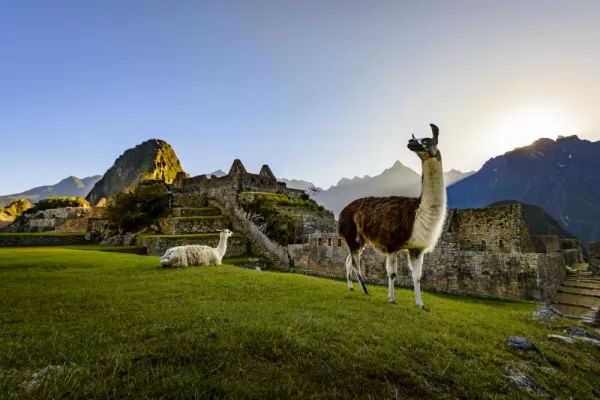
Hikers pass through varied landscapes, from high-altitude grasslands to deep valleys with subtropical vegetation. Wildlife is often seen along the way, including condors, hummingbirds, and llamas. Campsites are available at different points along the route, usually near water sources. Trekkers should bring good tents, warm sleeping bags, and lightweight cooking equipment. Packing essentials include trekking poles, sun protection, rain gear, and plenty of water purification tablets. Choquequirao ruins
Exploring the Archaeological Site
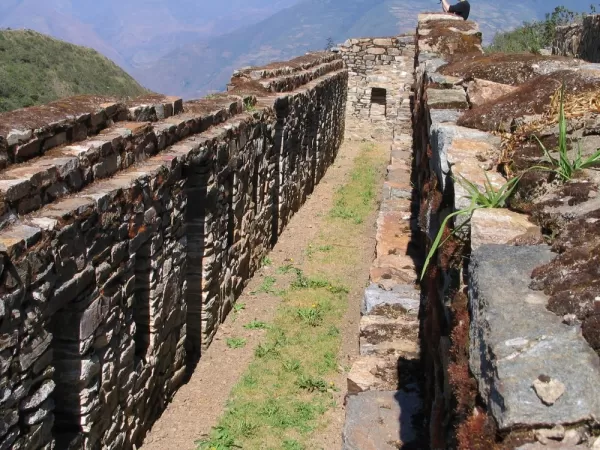
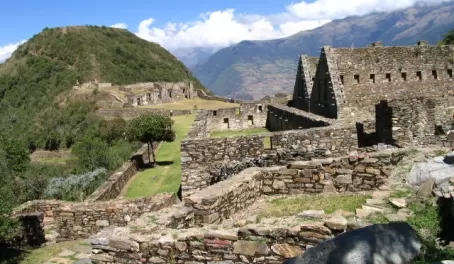
The Choquequirao site is spread across terraces and platforms cut into the mountain. Visitors will find large plazas, ceremonial platforms, and extensive agricultural terraces. One of the most unique areas is the set of “llama terraces,” where stone images of llamas are built into the walls.
Unlike Machu Picchu, Choquequirao allows more freedom to explore without large crowds. Walking through the ruins gives a sense of discovery and connection to Inca history. The size of the site is impressive, and much of it remains unexcavated, adding to the mystery.
Choquequirao vs Machu Picchu
Both Choquequirao and Machu Picchu share stunning mountain settings and fine Inca architecture. They both feature terraces, temples, and ceremonial sites.
The key difference is accessibility. Machu Picchu is easily reached by train and bus, while Choquequirao requires a multi-day trek. Machu Picchu is busy with thousands of daily visitors, but Choquequirao Peru receives only a small number, making it more peaceful. Choosing between them depends on whether you prefer comfort and crowds or adventure and solitude.
Travel Tips for Visiting Choquequirao
Permits are not as restricted as those for the Inca Trail, but visitors should still check for updated regulations. Fitness is important, as the trek is steep and demanding. Travelers should prepare by training on uphill hikes before arriving.
Practicing sustainable tourism is essential. Leave no trash behind, respect local communities, and use eco-friendly camping methods. Supporting local guides and porters also helps preserve the cultural and economic value of the trek.
Plan Your Trip
Visiting Choquequirao is one of Peru’s most rewarding adventures. The combination of history, remote landscapes, and challenging trekking makes it a unique destination. With talk of easier access coming soon, now may be the best time to experience it in its current state.
Our Trip Planners can help design a journey that fits your interests and fitness level, whether you want to tackle the Choquequirao trek, explore Cusco, or combine it with Machu Picchu.
Our team is waiting and ready to talk with you about your next adventure.
So go ahead and book an appointment with one of our specialized trip planners.
We had a fabulous trip to Peru thanks to Adventure Life and their local partner guides. We are so grateful for the smooth transitions from place to place and the ease with which we were shepherded and informed and had our own needs and idiosyncrasies accommodated for throughout this once in a lifetime trip.
Patricia Talbot
3 weeks ago
Timely responses and great follow up. Trying to figure out what was best for us is a great attribute for Jane and her team.
Neil Chernin
1 month ago
This is my fourth trip with Adventure Life and, as in the past, the staff was very knowledgeable and helpful. they talk with you about your desires and provide excellent suggestions.
Robert Thompson
2 months ago
AL was both responsive and patient as I worked through scheduling issues and changes.