Unique wildlife found during travels of the Ecuadorian Amazon (DarAnne Dunning)
Peru Animals and Wildlife
Thanks to its vast expanses of the Andes mountains and the Amazon rainforest, Peru features some of the world’s most brilliant biodiversity, with close to 2,000 species of birds and hundreds of species of reptiles and mammals. In fact, many of these species are endemic to Peru, meaning they can only be found here. Plus, there are even a few hardy animals that have adapted to life in the thin air of the soaring Andes mountains.
Wildlife in the Amazon
A river cruise or a stay at an ecological lodge will acquaint you with some of the species common to the Amazon jungle. Caiman (similar to crocodiles) and serpentine anacondas that patrol these waters can be safely seen from your canoe. Pink river dolphins are a unique sight as you make your way down the network of rivers that wind through the rainforest. If you want a truly special experience, then you might consider fishing… for piranhas! But don’t worry, although they are carnivorous, they don’t really have a taste for human flesh like their reputation indicates. THE BEGINNING OF OUR SECOND DAY (Milagros Polo)
Wildlife in the Peruvian Andes
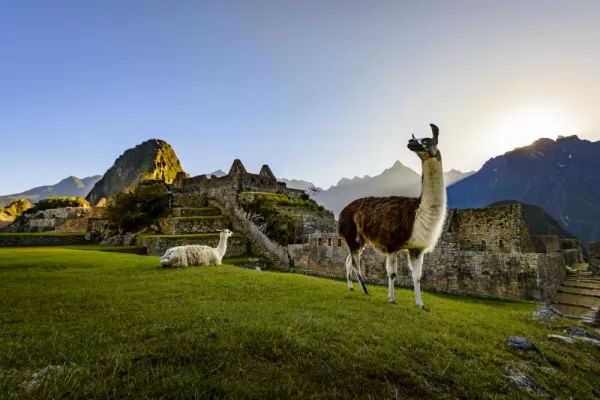
Despite harsh conditions, sparse vegetation, and thin air, there are several incredible species that have adapted their bodies to life in the Andean paramo. Perhaps the most recognized of these animals are the llama and the alpaca, pack animals known for their soft fur and good meat. Other mammals you might spot as you trek through the highlands are the Andean fox, the spectacled bear, or the tricky opossums. The mountains are also home to the smallest of the tapir species – the endangered mountain tapir – which is the only tapir that does not live in the tropical rainforest. Pumas can also be seen prowling through the paramo.
Birds – There’s no question that Peru is one of the world's best destinations for avid birders. Vibrant colors, distinct calls, curious mating dances, and other unique traits and behaviors distinguish these avian species. Parrots and parakeets are among the most common, which can be seen flocking to the clay licks, where they absorb some of the most important antioxidants and sodium to balance their acidic fruit diet. Other birds that can be seen flitting through the canopy are toucans, various hummingbird species, rainbow colored jays, and a stunning mix of other birds. An expert naturalist guide can help you spot and identify many of these. The king of birds – the scavenging Andean Condor, with an impressive wingspan around 10 feet, making it one of the largest birds of flight in the world. Actually, because of its size, it depends on the windy environment of the mountains and the air currents to soar. Peru also has several species of native highland hummingbirds.
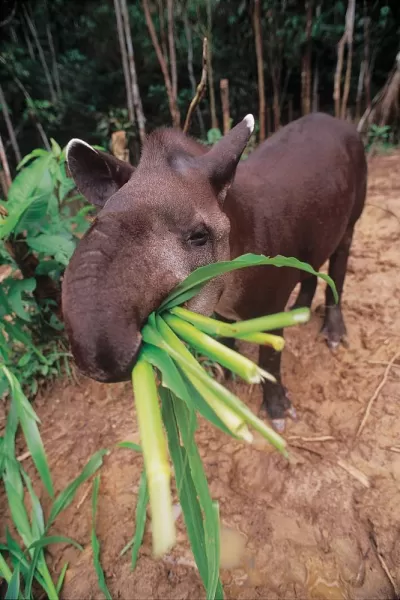
Mammals – Unlike most mammals, many unique species that populate the Peruvian Amazon tend to live in the trees. One group of mammals that highlight any trip to the jungle are monkeys that swing through the canopy and make their distinctive calls at all hours of the day and night. Their chorus echoes the diversity of species, from howler to woolly to the agile spidermonkey and many others. They live in company with other mammals, like the king of Amazon predators, the jaguar. Although these stealthy stalkers live on the ground, they are adept climbers and hunters. On the ground, you’ll find the large tapirs and their cousins, the peccaries, wallowing in mud pits or lumbering trough the jungle. A herd of sheep on the trail (Milagros Polo)
Iconic Animals of Peru
Peru animals are diverse and closely tied to culture and landscape. Some well-known Peruvian animals are symbols of tradition, while others are rare and endangered. Llamas & Alpacas
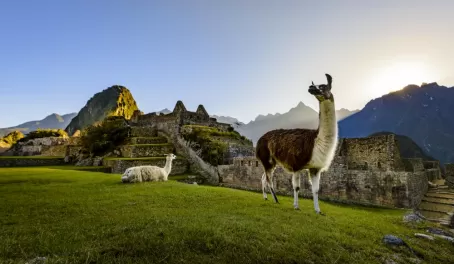
• Llamas have been used for centuries as pack animals in the Andes. They are strong, social, and often seen near Cusco and Machu Picchu.
• Alpacas are smaller and valued for their fine wool. They graze in high-altitude grasslands and are common around traditional Andean villages. Andean Condor
• The Andean condor has one of the largest wingspans in the world, over 10 feet.
• It is often seen gliding above Colca Canyon, riding warm air currents.
• In Andean culture, the condor is a sacred bird linked with strength and the heavens. Spectacled Bear
• The spectacled bear is the only bear species in South America.
• Its white markings around the eyes give it a distinctive look.
• It lives in cloud forests and mountain areas, feeding on fruits and plants. Pink River Dolphin
• The pink river dolphin lives in Peru’s Amazon basin.
• Its flexible neck allows it to swim through flooded forests in search of fish.
• Its pink color becomes brighter with age, making it one of the most striking animals native to Peru.
Tapir found during a wildlife tour of Peru (Terra Incognita)
Wildlife by Habitat in Peru
Animals native to Peru thrive in different environments, from rainforest to high mountains and marine coasts. This range of habitats explains why wildlife in Peru is so rich. Amazon Rainforest
• Jaguars roam the forest but are rarely seen.
• Monkeys such as howlers and squirrel monkeys swing through the treetops.
• Macaws gather at clay licks, showing off bright feathers.
• Caimans patrol rivers and lakes, best seen during night tours. Andean Highlands
• The vicuña is a wild relative of the alpaca, prized for its rare wool.
• Pumas are stealthy hunters found in mountain landscapes.
• Highland birds like Andean geese and giant hummingbirds thrive in cold environments. Coast & Marine
• Humboldt penguins live along rocky coastlines.
• Sea lions gather in colonies, especially around the Ballestas Islands.
• Whales, including humpbacks, migrate along the Pacific coast. Condor Landing, Colca Canyon (Charles Anderson)
Best Places to See Wildlife in Peru
Travelers can experience Peru animals best in reserves, parks, and natural areas where wildlife is protected. Amazon Reserves
• Manu National Park: Known for jaguars, tapirs, and exceptional bird diversity.
• Tambopata National Reserve: Famous for macaw clay licks, giant otters, and caiman spotting. Andes
• Sacred Valley: A good place to see llamas, alpacas, and Andean birds.
• Colca Canyon: The top destination for watching Andean condors in flight. Coast
• Ballestas Islands: Nicknamed the “Galapagos of Peru,” home to sea lions, penguins, and seabirds.
• Paracas National Reserve: Offers whale-watching and abundant marine birdlife.
Our team is waiting and ready to talk with you about your next adventure.
So go ahead and book an appointment with one of our specialized trip planners.
We had a fabulous trip to Peru thanks to Adventure Life and their local partner guides. We are so grateful for the smooth transitions from place to place and the ease with which we were shepherded and informed and had our own needs and idiosyncrasies accommodated for throughout this once in a lifetime trip.
Patricia Talbot
3 weeks ago
Timely responses and great follow up. Trying to figure out what was best for us is a great attribute for Jane and her team.
Neil Chernin
1 month ago
This is my fourth trip with Adventure Life and, as in the past, the staff was very knowledgeable and helpful. they talk with you about your desires and provide excellent suggestions.
Robert Thompson
2 months ago
AL was both responsive and patient as I worked through scheduling issues and changes.