Marine migrations are seasonal journeys animals make between feeding, breeding, and nursery waters. You may watch gray whale calves in Baja, nesting sea turtles in Costa Rica, salmon crowding Alaska's rivers, and polar bears waiting for Hudson Bay to freeze. Each happens in its own window, so the month you travel shapes what you'll see.
Gray whales: Magdalena Bay, Baja California Sur → winter into early spring → from small boats in the lagoon
Whale sharks: Bay of La Paz, Baja California Sur → about November to April → snorkeling from a boat
Sea turtles: Tortuguero, Costa Rica → green turtles July to October → on guided beach walks
Salmon: Alaska's coastal rivers → many runs mid-July through August → from skiffs, shores, and trails
Polar bears: Hudson Bay coast near Churchill, Canada → late October and early November → from a coastal lodge and on guided walks
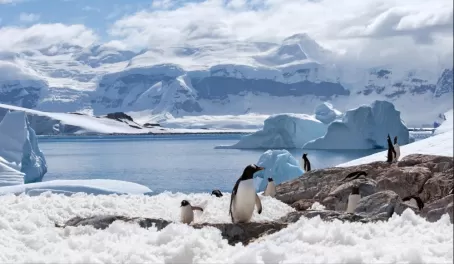
Whales: Antarctic Peninsula → about November to March → from the ship's deck and Zodiacs
Gray Whale Migration in Baja California Sur: When Do the Whales Arrive?
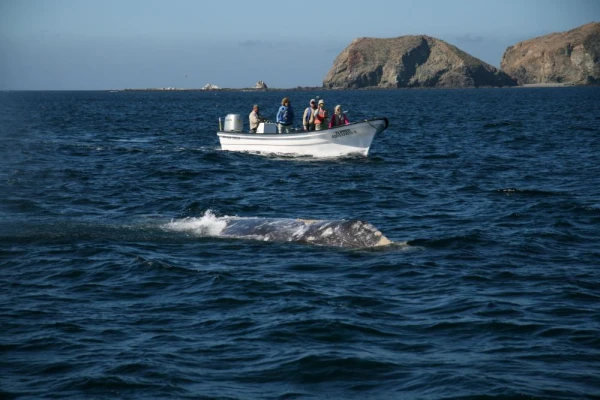
Whale watching in Magdalena Bay (Julia Kocubinski)
Gray whales leave their Arctic feeding grounds each fall and swim south to the warm, sheltered lagoons of Baja California Sur, where calves are born from early January to mid-February. NOAA Fisheries calls the round trip, about 10,000 miles and sometimes more than 14,000, one of the longest annual migrations of any mammal. The shallow lagoons give mothers quiet water to nurse their calves before the long trip back north.
In Magdalena Bay, small boats carry you into the calm lagoon, where mothers and calves may surface close by. Some whales may even approach the boats on their own. By mid-February, the whales turn north, a journey that continues into May. Gray whales are just one species with a distinctwhale watching season, from humpbacks in Hawaii to orcas in Alaska.
When: Winter into early spring Where: Magdalena Bay, Baja California Sur How you'll see it: From small boats in the lagoon
Whale Shark Migration in La Paz, Baja: Snorkeling in Winter
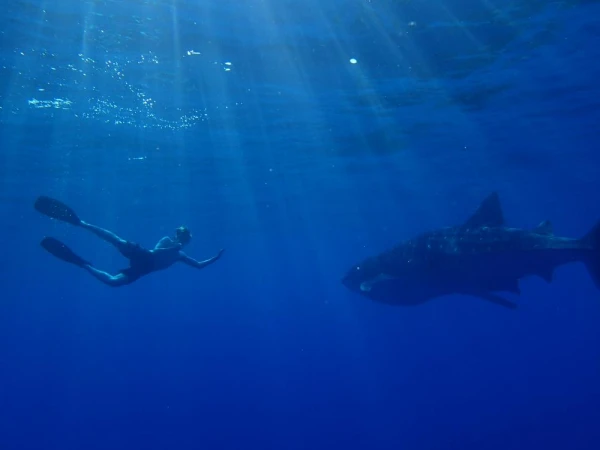
Whale shark and snorkeler (Credit to Un-Cruise)
Whale sharks, the biggest fish in the ocean, roam widely, and young sharks come back to the Bay of La Paz year after year, usually from about November to April. In the 2025–26 season, the bay saw the most sharks in February and March. Studies of these juveniles show many revisit the bay in later seasons, and some shift between bays along the Baja coast.
These giants eat mostly plankton, so they congregate wherever it's plentiful, and the bay is one of those places. You may snorkel beside them with no scuba certification needed. La Paz manages the season through a regulatory committee, and a responsible swim means giving the sharks space and never touching them.
In late spring, you may also see mobula rays leap from the water in large groups near La Paz.Baja snorkeling trips pair time in the water with sea lions, reef fish, and island hikes.
When: About November to April Where: Bay of La Paz, Baja California Sur How you'll see it: Snorkeling from a boat
Sea Turtle Migration in Costa Rica: Nesting Season at Tortuguero
Snorkel with incredible sea turtles
Female sea turtles swim from distant feeding grounds to nest on the same beaches, and on Costa Rica's Caribbean coast, green turtles begin arriving at Tortuguero in July, with nesting continuing through October. Tortuguero is the largest green turtle rookery in the Western Hemisphere.
Three species are commonly seen on Tortuguero's beaches: green, hawksbill, and leatherback. Leatherbacks come ashore earlier, from March to June, along the same coast, and other species nest on different schedules along the Pacific side, as thebest time to visit Costa Rica shows.
Guided walks during nesting season may let you observe a female dig her nest and lay her eggs. Because light disturbs nesting turtles, you'll leave flashlights and camera flashes off. Some trips add time with biologists who study leatherbacks at Pacuare Reserve, also on the Caribbean coast.
Tortuguero trips combine the nesting beaches with rainforest canals and wildlife.
When: Green turtles July to October; leatherbacks March to June Where: Tortuguero National Park, Caribbean coast of Costa Rica How you'll see it: Guided beach walks
Alaska Salmon Run: When Do Salmon Return to the Rivers?
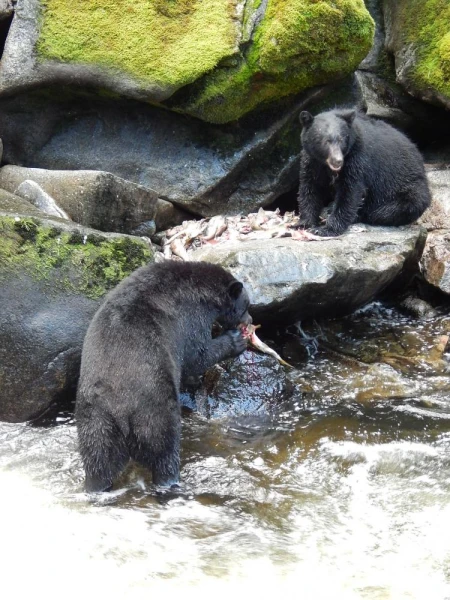
Alaskan bears feeding on salmon (Lynessa Nelson)
Pacific salmon spend years at sea (sockeye, for example, stay 1 to 4 years), then return to the Alaska streams where they hatched to spawn. Timing varies by species and river, but many runs peak from mid-July through August, with coho continuing into September.
No two streams follow quite the same calendar, and runs overlap with the busiest weeks of theAlaska cruise season. In late summer, the returning fish may draw bears and eagles to the water, and you may spot them feeding from a skiff, the shoreline, or a trail. Bears and eagles are only part of thewildlife in Alaska you may encounter along the coast.
Many Alaska wildlife trips reach the coastal waters where these runs come home each year.
When: Many runs mid-July through August; coho into September Where: Alaska's coastal rivers and streams How you'll see it: From skiffs, shores, and trails
Polar Bear Migration on Hudson Bay: Waiting for the Ice Near Churchill
Male polar bear (Mary Curry)
Polar bears are classified as marine mammals, and their migration follows the sea ice. On western Hudson Bay, bears wait out the ice-free months on land, then gather along the coast in late October and early November until the bay freezes and they can head back out to hunt seals. Put simply, polar bears migrate between the shore and the frozen sea, moving out onto the ice to hunt and back to land when it melts.
At remote lodges on the Hudson Bay coast, you may view bears from inside a fenced camp and join daily walks with experienced guides. On clear fall nights, the northern lights may appear as well.
When: Late October and early November Where: Western Hudson Bay coast, near Churchill, Manitoba How you'll see it: From a coastal lodge and on guided walks
Whale Migration in Antarctica: Summer Feeding Grounds
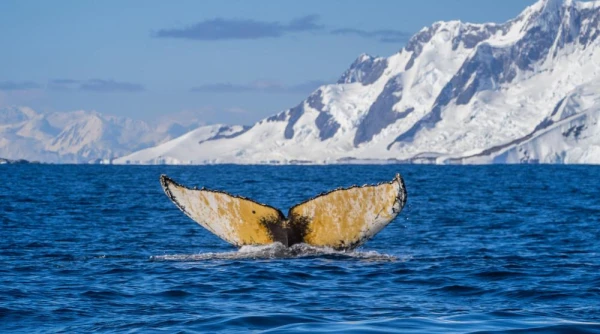
Glimpse of a whale in Antarctica (Meocre Li)
Humpback, minke, and other whales migrate to Antarctic waters to feed during the Southern Hemisphere summer, when expedition cruises run, from about November to March. All 7 Southern Hemisphere humpback populations feed in Antarctic or sub-Antarctic waters, and some range up to 5,000 miles from their breeding grounds.
They pass the winter months in warmer waters, where they mate and give birth, then make their way south to feed on krill and small fish through the summer.
You may catch spouts from the deck or notice whales rising beside your Zodiac. Sightings depend on the route, the ice, and the weather, and each part ofAntarctica's travel season brings its own wildlife highlights.
When: About November to March Where: Antarctic Peninsula How you'll see it: From the ship's deck and Zodiacs
Why Do Marine Animals Migrate?
Animal migration means a regular, seasonal journey between 2 or more places. For marine animals that migrate, 3 needs drive most of these journeys. Food pulls humpbacks to Antarctica and whale sharks to La Paz. Birth and breeding bring gray whales, sea turtles, and salmon back to familiar waters. Ice decides when polar bears can hunt.
Each migration links places that serve different purposes, such as productive feeding waters in one season and sheltered spots for raising young in another.
Guides and local rules that hold you at a respectful distance protect these animals, and they're a big part of why the encounters remain possible season after season.
Because every migration follows its own timetable, Adventure Life Trip Planners can share the details that help you choose the right week, ship, or lodge for the animals you most want to see.
Among the animals in this guide, gray whales cover the greatest distance, with a round trip of about 10,000 miles that sometimes tops 14,000. Humpbacks come next, with some populations swimming up to 5,000 miles one way.
What is the best time of year to see marine migrations?
There's no single season. Winter suits Baja's gray whales and whale sharks, summer and early fall are the months for Tortuguero's green turtles and Alaska's salmon runs, late fall is polar bear season on Hudson Bay, and Antarctica's whales feed from about November to March.
Do you need to scuba dive to see these migrations?
No. You can experience every migration in this guide from a ship, a small boat, a beach, or a lodge, or while snorkeling. Whale sharks in La Paz are snorkel only.
Are wildlife sightings guaranteed?
No. Trips visit these places during the expected season, but weather, ice, and animal behavior vary from year to year.
Our team is waiting and ready to talk with you about your next adventure.
So go ahead and book an appointment with one of our specialized trip planners.
Seamless connections. Excellent guides. Fulfilled every request. Very nice hotels.
Susan Vogel
1 day ago
Its a beautiful country, very friendly people, and everything went like clockwork. The local guide/driver was one of the best we've had: knowledgeable, always on time, had good ideas for what to see. Khiri Travel (the local travel agency) is terrific. Second trip we've taken with them. Recommend them and Adventure Life 100%
LEIGH
1 week ago
Adventure Life organized an incredible trip matching our desired itinerary, with perfect planning and coordination from end to end, including a hand-off of guides and drivers across an international land border. I highly recommend their services.
Paul Covey
1 week ago
Kassandra Miller Magruder and Cheska Abella always do a fine job.
Anonymous
1 week ago
Our guide Jhon Elvis is amazing. Our driver, Edgar, top notch. Each activity was well planned and first class. We always felt safe, able to enjoy the country and activities as well as not feeling rushed. We were able to make suggestions and modify things as we wanted and had such an amazing time.