This is a phenomenal site where you will get to see many of Española Island's endemic species. The trail will pass by the only Waved Albatross breeding site in all of the Galapagos. If you are lucky, you might see a young albatross take off for its first flight after up to five years at sea. Older birds stay at sea for months at a time, only coming back to breed. They have the same mate for life and will meet each other each year, only here to reproduce. Other species that can be seen are marine iguanas that stay brightly colored year-round, Galapagos doves, Nazca boobies, blue-footed boobies, swallow-tailed gulls, red-billed tropic birds, and Darwin finches.
Activities: Walking
Difficulty: Easy/Moderate
Landing: Dry
Possible Wildlife: Sea lions, marine iguanas, Galapagos hawk, waved albatross, red-billed tropic birds, various shorebirds, Nazca boobies, swallow-tailed gulls, finches, and sally lightfoot crabs.
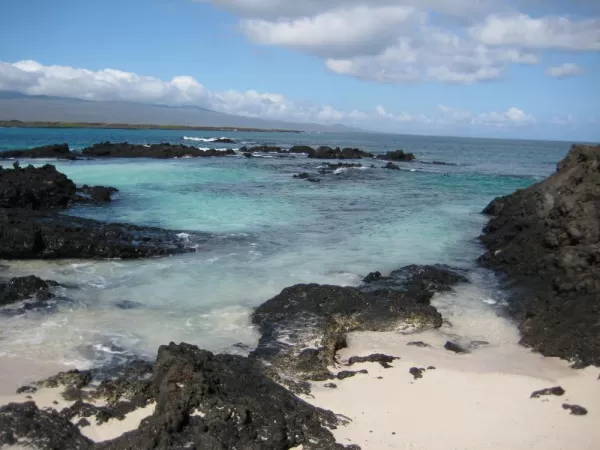
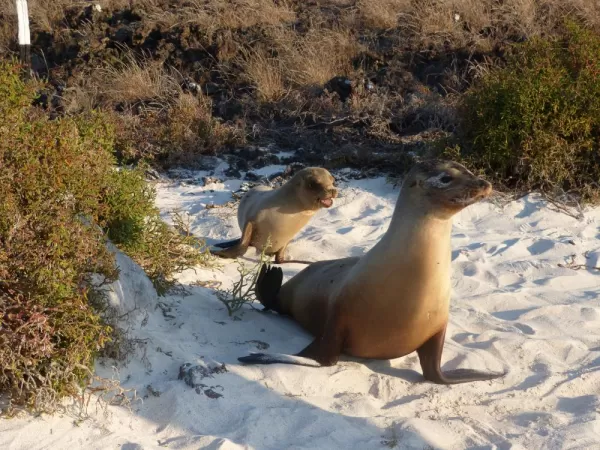
This white sandy beach is home to a large colony of sea lions and incredibly blue and turquoise waters. Three different finches can be seen, as well as the Española mockingbird. Over time, the mockingbird must have been offered water or food from tourists, and now they have no fear of walking on your things or landing very close to you. It is so important not to feed or touch the animals. It can disrupt their normal behaviors and threaten their future.
Activities: Walking, snorkeling, kayaking, and dinghy ride
Difficulty: Easy
Landing: Wet landing
Possible Wildlife: Sea lions, various shorebirds, mockingbirds, stingrays, and sea turtles.