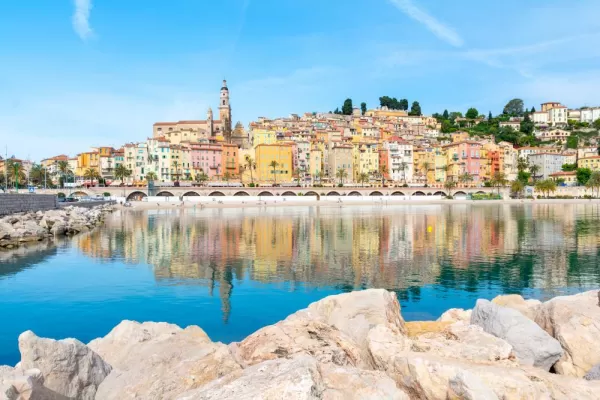
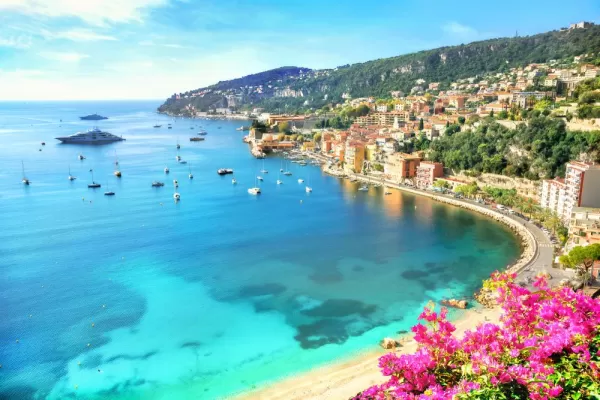
Lingering in the city of Nice gives you a second day to soak in this stunning stretch of coastline, with a variety of ‘Your Choice’ experiences on offer this morning. This afternoon, art lovers are spoilt for choice, with free time to explore one of the city’s many inviting galleries. Don’t miss the Musée Matisse, home to one of the world’s largest collections of Matisse’s paintings, drawings, and sculptures, or Musée des Beaux-Arts de Nice which houses a vast collection of iconic artworks. For those following a photographic journey on your voyage, the Musée de la Photographie Charles Nègre offers compelling exhibitions celebrating the power of the lens.
To frame your journey, you meet your fellow travelers this evening to enjoy drinks and canapes at a farewell reception.
Personalize your exploration with the included ‘Your Choice’ experiences.
Option 1 – Morning experience: A Nice Place to Paint
The Grande Dame of the French Riviera hosts your locally guided walking tour this morning. Throughout Nice’s history, A-listers have flocked to it in abundance – Queen Victoria, the Russian Tsarinas, old money, new money, and entire Hollywood studios. Waiting in the wings to paint them, write about them and dress them were Europe’s artists, authors and designers. Even Nice’s colorful street markets and flower markets offer an artistic vibe. Search for Queen Victoria’s favorite chocolate shop, stroll the streets of Nice’s old town, and soak up the ambience of the Riviera’s most celebrated city.
Option 2 – Morning experience: Nice’s Russian treasures
Fill your morning with a visit to two of Nice’s beloved Russian treasures. Known as the most important orthodox churches outside of Russia, St Nicholas Cathedral has become a shrine for the sacrificed family of Nicholas II, the last Tsar of Russia. Appealing to the Russian royal family as a winter retreat, Nice became a second home to much of Russian high society, who’s Tsar built an ornate Cathedral as a place for them to worship in the early 20th century. This magnificent church is laden with opulent orthodox artworks, icons and ornate carved woodwork. It offers an insight into the last Russian royal family and remains a place of pilgrimage for those who consider them to remain the rightful rulers of Russia.
Next, you indulge your artistic minds with a visit to one of Nice’s top cultural highlights — the Chagall Museum.
Born in Belarus, Marc Chagall spent much of his creative life in France. During World War II, he fled Nazi-occupied France with the help of the group that would become the International Rescue Committee, eventually reaching New York. After the war, Chagall returned to France with a remarkable body of work, now housed in this museum. Renowned as one of the greatest Jewish artists of the 20th century, Chagall is celebrated for his dreamlike, emotionally rich paintings, often inspired by religious themes. A visit to the museum offers a moving artistic experience.
Option 3 – Morning experience: Picasso
Pablo Picasso, as vibrant, colorful and surreal as his works, is one of the most captivating figures in art history. Spanish by birth, his heart found a home on the French Riviera and its enchanting hinterland. The two months Picasso spent at Antibes’ Castle Grimaldi marked one of his most prolific periods, where painting and socializing became a daily rhythm. Amid the post-war exuberance, Picasso thrived in the Riviera’s lively atmosphere, surrounded by friends, admirers, and a devoted 23-year-old girlfriend, all of whom adored him.
Explore Picasso’s masterpieces at Castle Grimaldi, where his creativity flourished, before enjoying free time to wander the waterfront streets of Antibes. Browse its colorful markets, and admire the ancient city walls, or stroll the marina at Port Vauban, where luxury yachts gleam in true riviera style.