Embark on a 4-day Galapagos cruise aboard the Nemo II, sailing from Baltra to the Charles Darwin Research Station, where you discover the islands’ origins and observe giant tortoises at the breeding center. Step ashore at South Plaza Island and follow rocky trails past land and marine iguanas, then continue to Santa Fe Island to encounter sea lion colonies and admire panoramic summit views. Climb to scenic lookouts on Bartolomé Island overlooking Pinnacle Rock, and snorkel in clear waters teeming with penguins, rays, sea lions, and reef fish. Explore the volcanic terrain of Chinese Hat, walk across fragile lava formations, and relax on white-sand beaches surrounded by marine life. Conclude the journey by sailing around Daphne Island before returning to Baltra, taking in one final panorama of the Galapagos Archipelago.
Highlights
Visit the Charles Darwin Station in Santa Cruz
Explore the east coast of Santa Cruz called South Plaza
Activity options vary depending on destination and operator. Activity level is determined by the range and intensity of activities you choose to participate in. Discuss with your Trip Planner which options are best for you.
After arriving at Baltra airport you will be greeted by a representative of the vessel then board the Nemo II, enjoy a welcome drink, and have lunch.
The main visit in Puerto Ayora is to the Charles Darwin Scientific Station. An excellent way to begin learning about the islands and their origin and formation is to visit the Station. You can also see how the Galapagos turtles are raised and meet Jorge, the famous solitary turtle. The Scientific Station has its own beach that receives many visitors on weekends. Afternoon activities: Visit to Charles Darwin Scientific Station and Breeding Center. Dry landing.
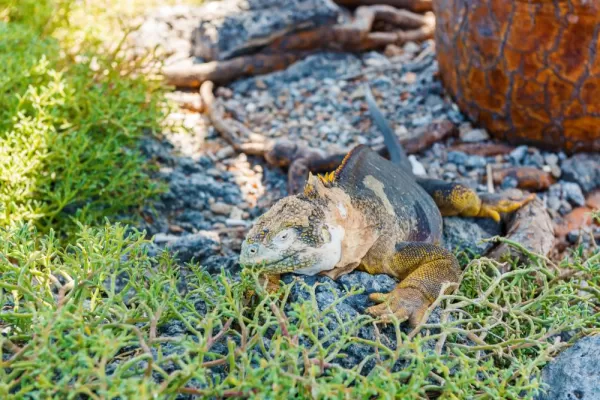
Visit to South Plaza begins with a dry landing. The rocky trail circumnavigates the island displaying the combination of dry and coastal vegetation zone. South Plaza has one of the largest populations of Land Iguanas in the Galapagos. The iguanas seem to be everywhere once you land. These larger than average yellow‐brown land iguanas feed on the fruit and pads of the prickly pear cactus.
South Plaza is also home to Marine Iguanas living along the coast and a Hybrid Iguanas whose fathers are Marine Iguanas and mothers are Land Iguanas. As the walk continues along the sea cliffs Swallow‐tailed Gulls, Frigatebirds, Audubon Shearwaters, Red‐billed Tropicbirds, Brown Pelicans, Blue‐Footed and Masked Boobies are frequently seen. Beneath along the shore a colony of Bachelor Sea Lions can be seen. Morning activities: Dry landing, Visit to South Plaza, Nature walk and Deep water snorkeling.
Santa Fe Island is home to one of the most beautiful coves in all the Galapagos. It is located in the southeastern part of Galapagos, 2 1/2 hours from Santa Cruz and 3 hours from San Cristobal. Santa Fe was formed from an uplift (rather than a volcano) giving the island a relatively flat surface rather than the typical conical shape of the other islands. Visits to Santa Fe begin with a panga boat ride across the lovely turquoise lagoon. Once ashore you are brought into contact with one of the many sea lion colonies in the Galapagos. Bulls compete for the right of beach master while cows lounge in the sun. It is quite a fascinating sight! The loop trail around the island leads past the salt bushes where Galapagos Hawks can be approached easily.
Santa Fe is home to endemic Land Iguanas. These iguanas are the largest in the islands and they are beige to chocolate brown in color and resemble small dinosaurs. Reaching the summit there is a stunning view of the cove beneath. Afternoon activities: Wet landing, Nature walk and Deep water snorkeling.
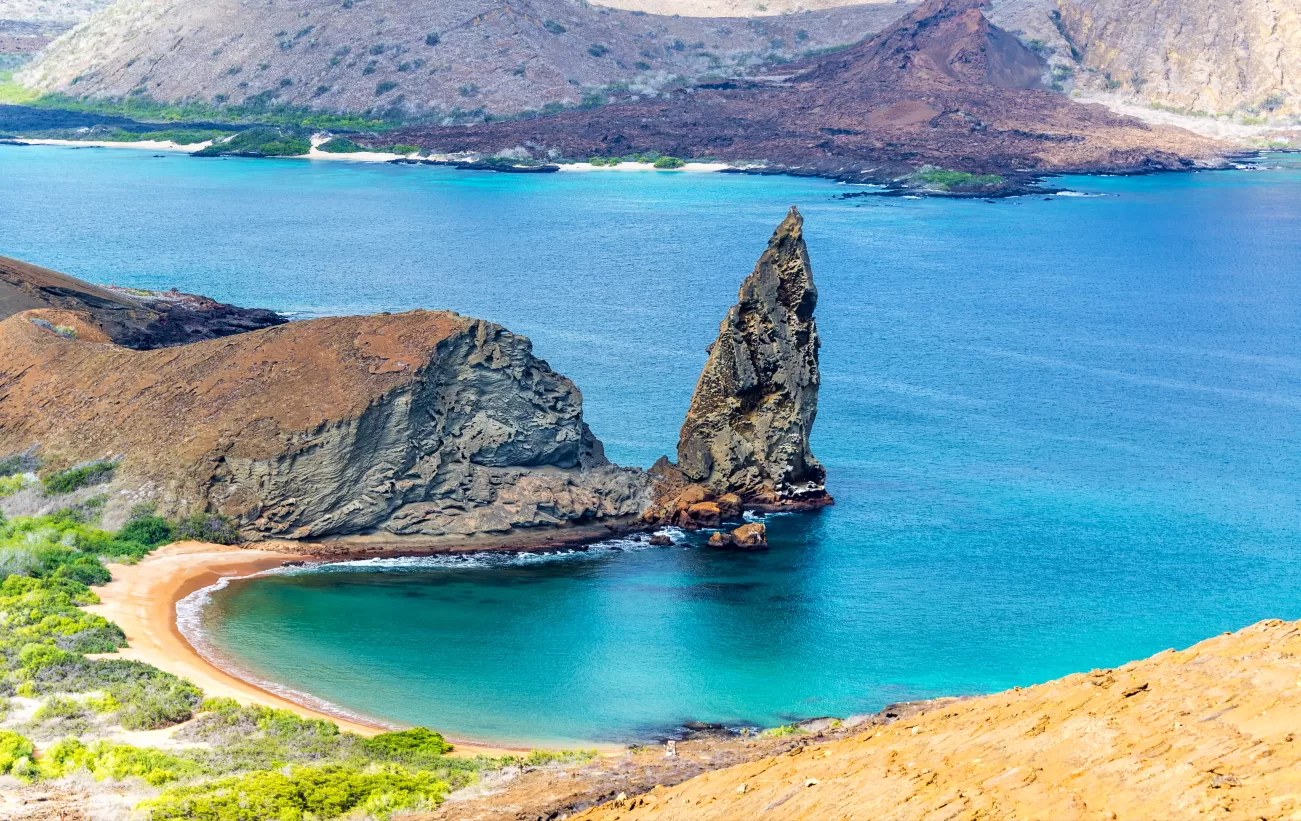
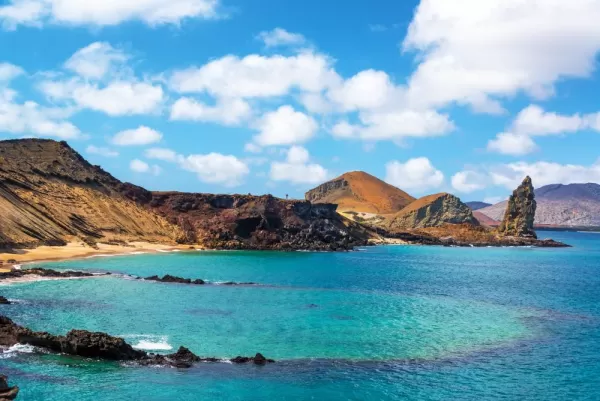
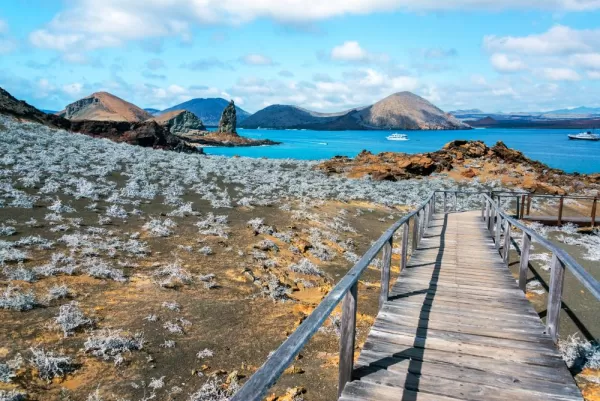
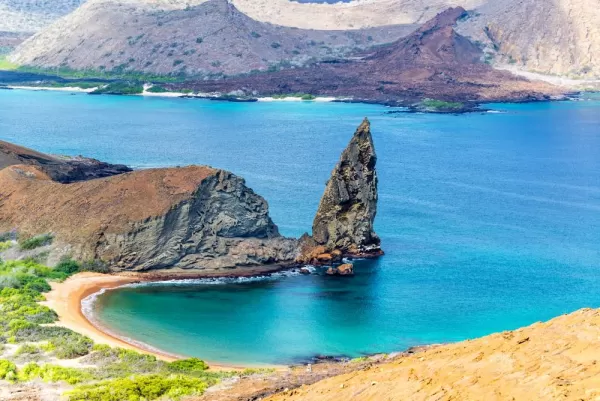
Bartolome's Pinnacle Rock has become one of the best recognized and most photographed sights in the islands. A prominent sight it was used as a target for US airmen during WWII. Lying beside the Pinnacle Rock are twin half-moon shaped beaches.
The northern beach is a popular snorkeling site where you have the opportunity to swim with fish, Sea Lions and Galapagos Penguins. Much larger animals can be found near the southern beach including stingrays, spotted eagle rays, white‐tipped sharks, and black‐tipped sharks. Little vegetation grows in this barren place. Mangroves border the beach and the small shrub Tiguilia grows in the volcanic sands. The seeds and tiny white flowers of the Chamaesycae provide food for the island's finch. These plants are common to arid regions and are able to survive in these harsh volcanic conditions. Morning activities: Deep water snorkeling, Visit to Bartolome, Dry landing and Nature walk.
Visit to Chinese Hat, a tiny island just off the southeast tip of Santiago. Its name describes the island's shape. Those visitors who travel to the island will find its special landscape worth the visit. Though centrally located it is one of the least visited sites in the area. National Park Service restrictions have limited the number of visitors to Chinese Hat. Multi‐day cruises with 14 passengers or less are the only ones permitted at this site. The landing is on a beautiful crescent‐shaped white sand beach, home to Sea Lions and Sally Lightfoot Crabs. The trail on Sombrero Chino's explores its volcanic origin, one of the most evident in the islands.
The lava rock is very fragile and tends to break off when people walk over it. The sharp outcroppings caused from these breaks make it necessary to wear good walking shoes. Patches of Pahoehoe Lava, cracked lava and lava tubes can be found on the island. While the path does not lead up the striking red rust sides of the Chinese Hat to the caldera, it does venture high enough on the island to offer some spectacular views of the waves crashing below. Snorkeling in the waters near Chinese Hat can create a stir; white‐tipped sharks frequent the area, as do the playful Galapagos Penguins and Sea Lions. Afternoon activities: Wet landing at Chinese Hat, Nature walk and Deep water snorkeling.
Day 4: Daphne Island | Disembark | Baltra
1 Breakfast
Among the central islands of the Galapagos Archipelago, Daphne Island sits north of Santa Cruz Island and west of Baltra Island. In reality, there are two islands: Daphne Major and Daphne Minor. They are one of the more accessible Galapagos Islands and are easily reached by most tour boats and cruises. Please note that disembarkation on these islands is not possible, therefore we will sail around them for one last look at the beautiful vistas of the Galapagos.
Return to Baltra and disembark the Nemo II and continue your independent travels.
Apologies for the inconvenience. Prices for not yet published. Below per person rate based on previous season. Contact us to confirm upcoming season pricing.
Prices for are estimated based on inflation. Contact us to confirm pricing and availability for your desired departure date.
$2,1002-3 travelers
Cabin 1 & 2
Matrimonial/double bed and private bathroom.
Cabin 3 & 4
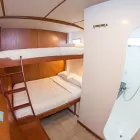
Lower single bed, double upper bed, and private bathroom.
Cabin 5
Lower double bed, upper single bed, and private bathroom.
Cabin 6 & 7
Lower single bed, upper single bed, and private bathroom.
Child Discount
25% discount for children under 12 at time of Galapagos cruise. Child discounts are conditional and may not apply on certain departures. Please contact us for more information.
Children under 12 may receive discounts on Galapagos flight fares and entrance fees. Contact us for details.
Initial deposit is 25% ($400 minimum) + Internal Flight Cost, and most travelers will call our office and pay the deposit with a credit card.
Final payment is due 100 days prior to departure by bank transfer, check or credit card. All final payments by credit card may be subject to a surcharge and maximum of $20,000 charge
Kate was great to work with in the planning stage. She was prompt, helpful, and efficient. Our tour guide, Edwin, was knowledgeable and passionate. We were very happy to have traveled with Adventure Life, it made the trip easy and a true pleasure. We could concentrate on enjoying the experience rather than the details of travel.