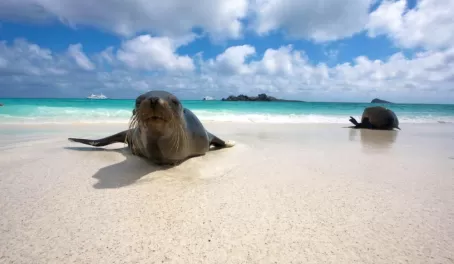
Although only about 25,000 people populate the idyllic Galapagos Islands, the region is home to rich cultural diversity shaped by a blend of ethnicities, customs, and traditions. Annexed by Ecuador in 1832, this volcanic archipelago is one of the country’s four ecological zones and reflects influences from Europe, the U.S., and mainland Ecuador. Together, these elements form a unique identity often referred to as Galapagos Islands culture or simply Galapagos culture.
Do People Live on the Galapagos Islands?
Yes, people do live on the Galapagos Islands. Currently, only four islands are permanently inhabited: Isabela, Santa Cruz, Floreana, and San Cristobal. The rest of the islands remain uninhabited, with visitor access carefully managed by the Galapagos National Park to protect their pristine ecosystems. This balance between local life and conservation is a defining feature of Galapagos culture today.
Industry
For centuries, the islands were primarily small fishing villages, known for some of the best seafood in the world. In recent decades, tourism has become the primary industry. Many locals now own and operate yachts, hotels, restaurants, and shops, benefitting from the more than 200,000 visitors who travel to the Galapagos each year.
A unique local trade is the harvesting of sea cucumbers, which are sold at high prices in Asia as an aphrodisiac, adding another dimension to the Galapagos Islands culture and economy.
Language in the Galapagos Islands
Many travelers wonder: what language do they speak in the Galapagos Islands? The official language is Spanish, as the islands are part of Ecuador. However, due to the growth of tourism, the language in Galapagos Island communities is often multilingual. Local guides, hoteliers, and residents frequently speak English, German, and French in addition to Spanish, making it one of the most linguistically diverse destinations in South America.
Cuisine
Food is a central part of Galapagos culture. The cuisine reflects both Ecuadorian traditions and the archipelago’s Pacific setting, with dishes centered around freshly caught seafood such as tropical fish, lobster, squid, octopus, shrimp, and other shellfish. Plantains and yucca are common accompaniments, and soups and ceviche are particularly popular, often rivaling those of mainland Ecuador.
Leisure
Similar to the mainland, soccer and volleyball are beloved pastimes. Enthusiasm for Ecuador’s national soccer team runs high across the islands. With tourism on the rise, outdoor activities such as snorkeling, diving, sea kayaking, hiking, and surfing are also central to daily life, giving the leisure side of Galapagos Islands culture a distinctly adventurous feel.
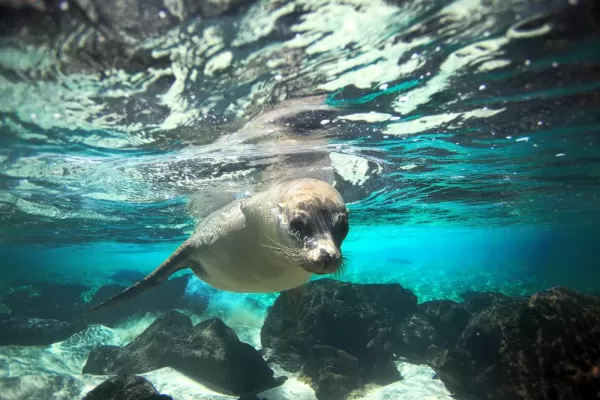
Sea lion encounter while snorkeling
Research & Investigation
The Galapagos are equally renowned for science and discovery. This archipelago continues to attract researchers following in Charles Darwin’s footsteps, studying endemic species and their unique habitats. The Charles Darwin Research Station remains the cornerstone of conservation, ensuring that Galapagos culture evolves hand-in-hand with environmental stewardship.
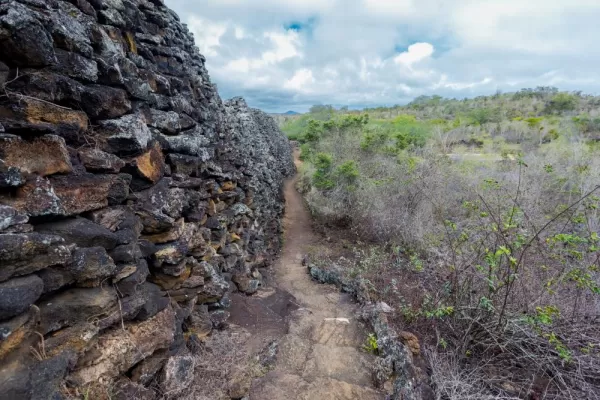
Wall of Tears on Isabela Island
A Brief History of the Galapagos
Before becoming part of Ecuador, the islands served as a hideout for buccaneers, whalers, and sailors in the 17th and 18th centuries. Officially annexed in 1832, the islands were given Spanish names, and settlers gradually formed small communities on the inhabited islands.
In the early 20th century, penal colonies existed on San Cristobal, Floreana, and Isabela—the haunting Wall of Tears on Isabela still bears witness to this history. Floreana also became infamous in the 1930s for mysterious disappearances among early settlers. During World War II, Santa Cruz and Baltra were used as U.S. military bases in the Pacific theater. Since then, the Galapagos have transformed into a hub for conservation, research, and sustainable tourism, ensuring the preservation of both their natural wonders and unique cultural heritage.
By submitting your email address, you are agreeing to opt in to marketing communications. We hold your information private and do not share it with third parties.
Clara T.
Galapagos
Chat Galapagos with a specialist
Our team is waiting and ready to talk with you about your next adventure.
So go ahead and book an appointment with one of our specialized trip planners.