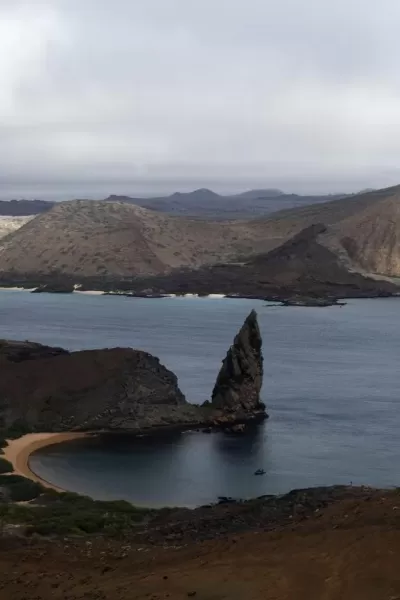
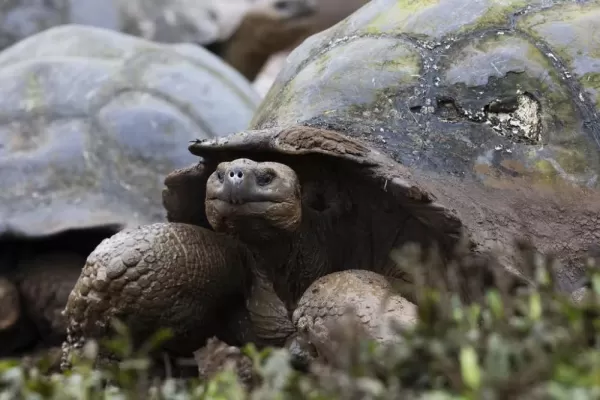
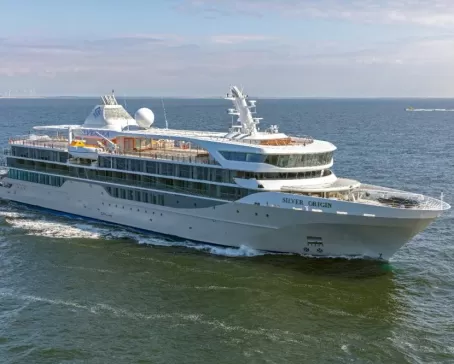
Tagus Cove is bordered by a steep rocky coastline and has for centuries offered shelter for ships and yachts. The cove is named after the British frigate HMS Tagus visiting the Galapagos in 1814. Already by the 1830s other ships had their visits recorded by painting or scratching their name onto the rocks. On approach, Galapagos Penguins and Flightless Cormorants - both birds mainly found on Isabela's west coast and neighboring Fernandina - are often seen. From the landing, a trail through an incense tree forest leads past Darwin Lake to a viewpoint on top of a spatter cone. During the hike, several land birds including Medium Ground-Finches, Galapagos Hawks, Yellow Warblers as well as Large-billed Flycatchers are often present. Brown Noddies and Blue-footed Boobies prefer the rocks along the shore.
Included Activity:
Kayaking with Silversea Expedition team
Please note: Activity level and duration of this activity are approximate. More specific information and logistics are communicated by the Expedition Leader on board. This activity is recommended only for guests in good physical condition and can require up to 60-minutes of paddling. Although no walking is required, guests must be able to climb into the transfer Zodiac and to lift their own weight to transfer from the Zodiac into the kayak and vice versa. This tour is not suitable for guests with limited mobility or those who use a wheelchair, and for guests who suffer from bodily injuries that prevent the movement of all joints. A buoyancy aid, dry suit, neoprene booties, gloves, and dry bags are provided. Maximum available dry suit size is XXL. The minimum age to participate is 16 years. Children under 18 must be accompanied by an adult. Lifejackets are provided. Child lifejackets are available. Guests must be able to speak conversational English in order to understand safety instructions. Some prior kayaking experience is required to participate in this activity. It is recommended to have electronic equipment sealed in waterproof bags, in case of rain or spray.
Hiking with Silversea Expedition team
Please note: Activity level and duration of this activity are approximate. More specific information and logistics are communicated by the Expedition Leader on board. This activity is not suitable for guests with limited mobility or guests who use a wheelchair. Guests with balance limitations (even slight) are advised to bring along walking poles to assist on slippery and uneven surfaces while hiking. Hikes are offered in various degrees of difficulty and in order to avoid injury guests are advised to carefully evaluate their abilities when deciding which hikes to participate in. Hikes go through different types of terrains that may be wet, muddy, rocky, sandy, icy. Hikes takes place in different types of weather conditions and therefore guests must be ready with appropriate clothing and footwear. It is recommend you bring your filled Silversea drinking bottle to remain hydrated during the outing, as well as your Silversea backpack to carry your essential items. It is recommended to have electronic equipment sealed in waterproof bags, in case of rain or spray.
Zodiac Cruise with Silversea Expedition team
Please note: Activity level and duration of this activity are approximate. More specific information and logistics are communicated by the Expedition Leader on board. This activity is not suitable for guests with limited mobility, back/neck/hip problems, those who are pregnant or guests who use a wheelchair. Although no walking is required, guests must be able to manoeuvre in and out of the Zodiac. Participants must be a minimum of 6 years of age. Children under the age of 18 must be accompanied by an adult. Lifejackets are provided. Child lifejackets are available. Guests must be able to speak conversational English in order to understand safety instructions. Dress according to the climate, and please ensure you wear shoes that are either waterproof or that may get wet, such as Tevas, Wet Shoes (no flip-flop or similar). You may be splashed. It is recommended to have electronic equipment sealed in waterproof bags, in case of rain or spray. Please also ensure that you apply ample sunscreen to protect yourself from sunburn.
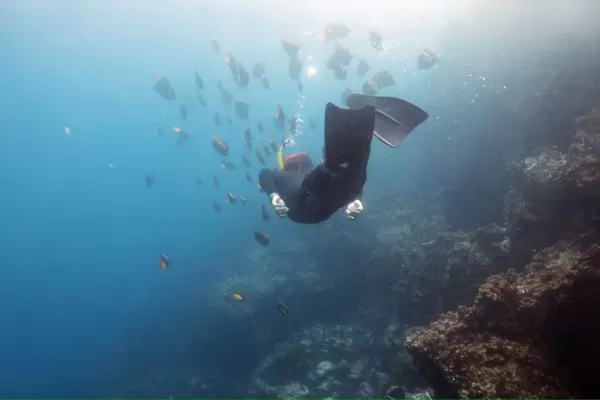
Snorkeling with Silversea Expedition team
Please note: Activity level and duration of this activity are approximate. More specific information and logistics are communicated by the Expedition Leader on board. This activity is recommended only for guests in good physical condition and with good swimming skills; some snorkeling experience might be needed in certain areas. Snorkeling takes place from either a beach or a Zodiac platform dependent on the conditions of the day. Equipment is available for all the guests, though you are welcome to bring your own equipment if you wish (full-face masks are prohibited). Some floating noodles are also be available for those guests who wish to make use of them. As the sun can be strong in these areas, you recommend the use of eco-friendly sunscreen and a rash guard to protect as much skin as possible. It is compulsory to snorkel with a buddy and never alone. You are kindly reminded not to swim too far away from the site. Your Expedition Team is available to give you all the specific information you need. It is especially important to remember not to touch or kick anything nor stand on corals. If you are using an underwater camera or any other equipment, make sure it safely attached to you (neck or wrist strap) and that you are comfortable in the water first, prior to usage. Please remember not to interfere with the animals that you encounter during your excursion.
Elizabeth Bay is one of the marine sites on Isabela's west coast. South of Alcedo Volcano and north of Sierra Negra, Elizabeth Bay is found at Isabela's narrowest east-west extension where the lava flows of these two volcanoes have connected each other. Elizabeth Bay's shores show mangroves and specifically the easternmost part, a cove which can only be entered via a narrow channel, has red, white, and black mangroves. Different animals prefer different parts of Elizabeth Bay. Las Marielas, three rocks at the entrance to the bay, are favored by Blue-footed Boobies, Flightless Cormorants, and Galapagos Penguins as a resting place, while the mangrove area is preferred by Great Blue Herons for hunting or the Magnificent Frigatebirds for perching. The bay is used by turtles, rays and even sharks for feeding or resting. The shallow water and the root system of the mangroves in the small inlet allow smaller fish to hide from bigger predators.